10 Best Admissions Software Tools for Higher Education in 2026


College and university admissions teams are working harder than ever to hit enrollment targets, with smaller staffs, tighter budgets, and a student population that expects instant, personalized communication at every touchpoint.
The pressure is real. Applications per student are rising, but overall enrollment remains unpredictable. The demographic cliff is approaching. And students are making college decisions based on experience as much as academics — which means the quality of your digital engagement matters more than it ever has.
That’s where admissions software comes in. The right tools help teams automate the repetitive, personalize outreach at scale, and stay responsive across every channel students use, without burning out the people behind the process.
Jeffrey J. Selingo
Author, College Unbound
In this blog, we’ll cover the 10 best admissions software tools for higher education in 2026, what to look for when evaluating them, and how institutions are using them to drive measurable results.
So, what is admissions software, anyway?
Admissions software isn’t a one-size-fits-all term; Admissions teams use an array of technology like social media scheduling tools, spreadsheets, and customer relationship management platforms to get the job done.
In short, admissions software is designed to support higher ed institutions in managing the full applicant lifecycle. From outreach to application review and enrollment, these platforms offer functionality like communication workflows, automated reminders, analytics dashboards, and peer or video engagement. The best admissions tools improve applicant experiences, empower staff, and ultimately, help institutions meet enrollment goals.
Who uses admissions software?
While the Provost or Chief Academic Officer often leads the charge when it comes to making the final decision on new technology, various roles play a part in scoping and assessing new admissions tools.
- Admissions Counselors: Use CRMs, SMS platforms, and chat tools to stay in touch with prospective students.
- Enrollment Leadership: Focus on conversion rates, yield, ROI, and data-driven decision-making.
- Marketing Teams: Use integrated tools to launch segmented campaigns and measure impact.
- IT & Operations: Ensure seamless integration with SIS, compliance, and long-term scalability.
What to look for in admissions software
The right admissions software does more than manage applications. It supports every touchpoint between a prospective student’s first question and their first day on campus. Here are the capabilities that matter most.
|
Feature |
What it does |
Why it matters |
|---|---|---|
|
Automated outreach and communication |
Triggers personalized emails, texts, and reminders based on student behavior and application status |
Admissions teams are managing thousands of records simultaneously — automation ensures no student falls through the cracks without adding to staff workload |
|
AI-powered chat and virtual assistance |
Answers student questions 24/7 through an intelligent chatbot on your website or portal |
Students research outside business hours; a virtual assistant handles the volume your staff can’t while still delivering a responsive experience |
|
Peer and video engagement |
Connects prospective students with current students, staff, or video messages from admissions counselors |
Students trust students — peer conversations and personalized video build the kind of authentic connection that moves students from interested to enrolled |
|
Real-time dashboards and predictive analytics |
Tracks funnel performance, identifies drop-off points, and forecasts yield |
Data-driven enrollment management reduces guesswork and helps teams intervene with at-risk students before it’s too late |
|
SIS integration |
Syncs with student information systems like Ellucian, PowerSchool, and Banner |
Disconnected systems create data silos and staff frustration — clean integration means a unified student record from first inquiry through enrollment |
|
Mobile-first experience |
Optimized for phones and tablets across all communication channels |
Today’s students live on their phones; platforms that aren’t mobile-responsive create friction at exactly the moment you need to reduce it |
|
Multi-channel communication |
Supports email, SMS, chat, video, and social from one platform |
Students have preferred channels — meeting them where they are increases engagement rates and reduces melt |
|
Scalability across departments |
Supports collaboration between Admissions, Financial Aid, Marketing, and IT |
Enrollment doesn’t happen in one office; software that scales across teams creates a more coordinated, consistent student experience |
What makes admissions software different for higher education?
Not all admissions software is built for the complexity of higher ed. K–12 platforms, generic CRMs, and entry-level enrollment tools often fall short when institutions need to manage thousands of prospective students across multiple programs, campuses, and communication channels simultaneously.
Higher education admissions software is built for that scale. It accounts for the full applicant journey — from first inquiry through deposit — and integrates with the systems colleges and universities already rely on, including student information systems (SIS), financial aid platforms, and learning management systems (LMS).
The best higher education admissions software also reflects how students actually behave today: researching programs late at night, expecting answers in minutes, and making decisions based on whether an institution feels accessible and responsive. Tools that can’t meet students where they are — on mobile, on chat, on their preferred channels — aren’t really built for higher ed at all.
Here’s what separates purpose-built higher education admissions software from the rest:
- SIS integration: Clean, bidirectional data flow with platforms like Ellucian, PowerSchool, and Banner
- Multi-channel communication: Email, SMS, chat, and video in one coordinated system
- AI-powered personalization: Automated outreach that still feels individual
- 24/7 availability: Students research outside business hours; your platform needs to be there when they are
- Enrollment analytics: Real-time dashboards that show where students are in the funnel and where they’re dropping off
- Peer and video engagement: Tools that let current students and staff build authentic connection at scale
10 best admissions software tools for 2026
1. Ivy & Ocelot from Gravyty
Prospective students don’t keep business hours. They research programs at midnight, expect answers in minutes, and will move on if a school feels unresponsive. Ivy & Ocelot is built for that reality.
The platform combines AI-powered chat, live assistance, SMS outreach, and a smart knowledge base to support applicants across the full admissions journey — from answering financial aid questions after hours to nudging students about missing documents before a deadline. For admissions teams managing high inquiry volume with lean staffs, it’s the difference between staying responsive and falling behind.
Success story: The University of Houston
The University of Houston needed a way to handle a growing wave of repetitive student inquiries — password resets, transcript checks, FAFSA status updates, account balances — without consuming the staff time those questions were eating up.
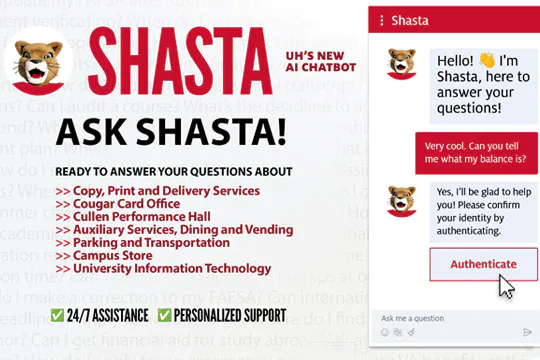
They deployed Shasta, an AI-powered virtual assistant built on Ivy & Ocelot, across Enrollment Services, Financial Aid, and IT. The results speak for themselves:
- 33,000+ conversations handled with an 82% resolution rate
- 28% decrease in Financial Aid call volume year over year
- 10% decrease in Admissions call volume year over year
- 75% reduction in IT live chat volume year over year
That’s not just operational efficiency — it’s staff capacity redirected toward the students who actually need a human conversation.
Take a virtual tour of Ivy & Ocelot from Gravyty
2. Slate by Technosolutions
Slate is one of the most widely adopted admissions CRMs in higher education, and for good reason. It offers end-to-end functionality across the full recruitment cycle — prospect management, application review, event registration, and multi-channel communication — all in one platform.
What sets Slate apart is its flexibility. Admissions teams can build custom workflows, configure their own reporting dashboards, and manage everything from yield campaigns to interview scheduling without relying on IT for every change. For institutions that want full-funnel visibility and deep configurability, Slate is the standard against which most other admissions CRMs are measured.
3. Salesforce Education Cloud
For institutions already running Salesforce — or those that want a highly scalable, deeply integrated platform — Education Cloud brings the power of Salesforce CRM to the admissions context. It supports prospect tracking, personalized communication, and funnel analytics, with the added advantage of connecting admissions data to alumni, advancement, and student success teams on the same platform.
It’s a significant investment in implementation and administration, but for larger institutions or systems that need enterprise-grade infrastructure across multiple departments, Education Cloud offers a level of integration and scalability that point solutions can’t match.
4. Gratavid from Gravyty
The most effective recruiting conversations aren’t always the ones that happen in person. Gratavid makes it easy for admissions teams to send personalized video messages at scale — a welcome from a dean, a campus tour from a current student, a post-admit congratulations that actually feels personal.
Video cuts through in a way that email alone doesn’t. It builds the kind of emotional connection that moves students from “I’m considering this school” to “this is where I belong.” And because Gratavid is built for scale, a small admissions team can send hundreds of personalized videos without it becoming a production.
Nolan Oxley
Sr. Associate Director of Admissions, Miss Hall’s School
5. Liaison
Liaison sits at the intersection of application management and enrollment intelligence. Best known for its centralized application platforms in health professions and graduate education, Liaison also offers tools for enrollment analytics and predictive modeling — helping admissions teams understand not just who applied, but who is most likely to enroll.
For graduate and professional programs in particular, Liaison’s combination of application infrastructure and data-driven yield tools makes it a strong fit for teams that need both operational efficiency and strategic insight from the same platform.
6. PeerPal from Gravyty
No admissions counselor can fully answer the question a prospective student actually wants answered: What is it really like to go here?
PeerPal connects prospects with current students, staff, or parents through a dedicated chat widget on your institution’s website. Whether someone wants to talk about campus culture, DEI, switching majors, or what the housing situation is actually like, PeerPal puts them in conversation with the people who can give an honest answer.
Peer connection builds trust in a way that polished marketing can’t — and trust is what converts interest into enrollment.
7. Ellucian Banner
For many institutions, Ellucian Banner is already the backbone of student data management. Its admissions module extends that infrastructure into the recruitment process — managing applicant records, automating follow-up communications, and tracking interactions alongside financial aid and registration data.
Banner isn’t the most flexible or modern tool on this list, but for institutions already in the Ellucian ecosystem, it offers something valuable: a single source of truth that connects admissions activity to the broader student record from day one.
8. Concept3D
For prospective students who can’t make it to campus — international applicants, out-of-state students, students with limited travel budgets — the inability to visit in person shouldn’t be the reason they cross a school off their list. Concept3D addresses that gap with virtual campus maps and immersive tours that let students explore a campus remotely.
It’s a targeted tool, not a full admissions platform, but for institutions where in-person visits are a significant driver of yield, virtual tour technology has a measurable impact on conversion among students who would otherwise never set foot on campus before making a decision.
9. MySchool SIS
MySchool SIS centralizes core student data and streamlines application and enrollment workflows in a single system. Its admissions features cover document collection, communication tracking, and decision management — making it particularly useful for smaller institutions or those with distributed teams that need a straightforward, integrated solution without the complexity of a large enterprise platform.
For institutions that want admissions and student records managed in one place without the overhead of a multi-vendor stack, MySchool SIS is worth evaluating.
10. PowerSchool
PowerSchool’s unified platform is built to span the full educational journey, making it especially relevant for institutions that serve dual-enrollment populations or have close ties to K–12 pipelines. Its admissions and registration tools work alongside records and analytics in one system, giving enrollment leaders a view of student engagement and trends across a diverse and complex population.
For community colleges, technical institutions, or universities with significant dual-enrollment programs, PowerSchool’s ability to manage multiple student populations in one place is a genuine operational advantage.
How to evaluate and roll out admissions software
Once you’ve decided to implement a new admissions tool, what’s the best course of action for assessing it and adopting it throughout the institution?
Here’s a suggested playbook for rolling out new admissions software:
1. Identify pain points
Start by assessing where your admissions process is breaking down. Are you losing students between inquiry and application? Are response times lagging? Pinpointing your biggest challenges will help guide the right tool selection.
2. Define must-have features
Create a shortlist of the capabilities that matter most for your team—such as SMS automation, peer engagement, mobile access, or SIS integration. Prioritize tools that align with your enrollment strategy and team capacity.
3. Engage key stakeholders early
Include voices from Admissions, Enrollment Management, Marketing, and IT. Their input ensures a smoother evaluation process, stronger cross-campus alignment, and higher adoption rates later.
4. Request demos and pilot programs
Get hands-on with your top choices. Use pilot programs to test real-world impact; track engagement, staff time saved, or application completion rates with a small cohort.
5. Measure ROI and impact (and report on it to stakeholders)
Use data to tell the story. Whether it’s an increase in yield, reduced melt, or faster follow-ups, demonstrate how the tool supports strategic goals and reduces workload.
6. Plan for onboarding and training
Choose vendors that offer strong support and implementation resources. Plan for launch timelines, training sessions, and documentation that will help your team get up to speed quickly.
7. Roll out and share wins
Start with a phased rollout if needed, scaling across teams as you see success. As early wins emerge, communicate them across campus. Success stories create momentum and help secure further buy-in.
Get started with admissions software
The admissions landscape isn’t slowing down – or getting less complex – anytime soon. Institutions that embrace digital-first, student-centered tools are the ones that will stand out. Whether you’re exploring AI-driven engagement, personalized video, or peer-based recruitment, the best admissions software empowers your team to be more impactful at scale.
Ready to see how Ivy & Ocelot, PeerPal, and Gratavid can elevate your recruitment strategy? Let’s talk.
Frequently asked questions about admissions software
Admissions software helps colleges and universities manage the full applicant lifecycle — from first inquiry through enrollment. Core use cases include automating outreach and follow-ups, tracking application status, answering prospective student questions, managing campus visit scheduling, and analyzing funnel performance. More advanced platforms also support peer engagement, personalized video, and AI-powered chat.
An SIS — like Ellucian Banner or PowerSchool — is a record-keeping system. It stores student data, manages registration, and tracks academic history. Admissions software is focused on recruitment and engagement: communicating with prospects, nurturing leads, and converting applicants into enrolled students. The two systems work best when they’re integrated, so data flows cleanly between them.
The most widely used admissions tools in higher education include Slate by Technolutions (a popular admissions CRM), Ellucian Banner (SIS with admissions functionality), and AI-powered engagement platforms like Ivy & Ocelot from Gravyty for chat, SMS, and automated outreach. Many institutions use a combination — a core CRM or SIS plus specialized tools for engagement, video, and peer connection.
AI allows admissions teams to do more with less. Specifically, it enables 24/7 automated responses to prospective student questions, personalized outreach at scale without manual effort, predictive analytics that identify which students are most likely to enroll or melt, and smarter lead scoring that helps counselors prioritize their time. For teams managing thousands of inquiries with limited staff, AI isn’t a nice-to-have — it’s how the work gets done.
Pricing varies widely depending on the platform, institution size, and scope of implementation. SIS platforms like Ellucian are typically enterprise contracts negotiated at the institutional level. Point solutions for chat, SMS, or video engagement often use per-seat or volume-based pricing. Most vendors offer custom quotes; requesting a demo is usually the fastest way to get a realistic number for your institution’s needs.
The most effective evaluation process starts with identifying your biggest pain points — slow response times, high melt rates, staff bandwidth — and mapping those to specific capabilities. From there, most teams request demos, run a pilot with a small cohort, and track measurable outcomes like response time, application completion rates, or yield. Involving stakeholders from Admissions, IT, and Enrollment Management early makes adoption smoother and buy-in stronger.