Small Campaigns, Big Results: How Long Beach State Athletics Reinvented Its Giving Strategy

152.3%
increase in annual giving dollars for athletics, year-over-year
130.8%
increase in total athletic donors
1,047
first-time athletic donors, up 234% year-over-year
44%
increase in general giving dollars outside the annual fund
$25,000
Two gifts of this size closed within two months of a single campaign
About Long Beach State Athletics
California State University, Long Beach (known as Long Beach State) was founded in 1949 and is home to more than 42,000 students in Long Beach, California. A founding member of the Big West Conference, Long Beach State Athletics, branded as The Beach, fields 19 varsity programs and has built a reputation for developing student-athletes on the field and in the classroom alike.
The challenge: One day of giving wasn’t enough
For years, Long Beach State Athletics leaned on a single day of giving to carry its annual fundraising. It’s a familiar model across college athletics: pick one day, rally the department, and hope donors show up for every team at once.
But a once-a-year, department-wide ask doesn’t reflect how donors actually give. A supporter who gives to volleyball doesn’t necessarily feel the same pull toward baseball. And when every program competes for attention on the same day, no single team stands out.
Matt Schneider, Long Beach State’s Assistant Athletic Director for Development, saw an opportunity to rebuild the model around donor affinity instead: one team, one ask at a time. The bigger constraint was resourcing. With a lean development staff supporting 19 varsity programs, any new strategy had to work without adding to what coaches (who already have full-time jobs coaching) were being asked to do.
The solution: Sport-specific micro-campaigns, built months in advance
Schneider replaced the department’s single day of giving with a series of sport-specific micro-campaigns, each one built around a team, its fundraising priorities, and a giving day designed just for that program.
The department’s fundraising pillars stayed consistent: scholarships, nutrition, sports performance, and budget enhancements. What changed was the packaging. Instead of one department-wide ask, donors saw a specific opportunity tied to a team they already supported — and a second ask to that same donor landed with far more receptivity than a generic appeal ever had.
Matt Schneider, Assistant Athletic Director for Development at Long Beach State
Planning that starts months out
Schneider sits down with coaches and sports supervisors months before each campaign; for instance, starting in June or July to prepare for a September launch. Over roughly two months, his team builds the email series, text and call scripts, and crowdfunding pages for each micro-campaign, finalizing every detail about one month before it goes live.
Schneider’s approach hands coaches a finished plan and asks for one thing in return: review it, then rally the team. The emails, the scripts, and the logistics stay with the development office, so coaches can keep leaning on the trust they’ve already built with donors.
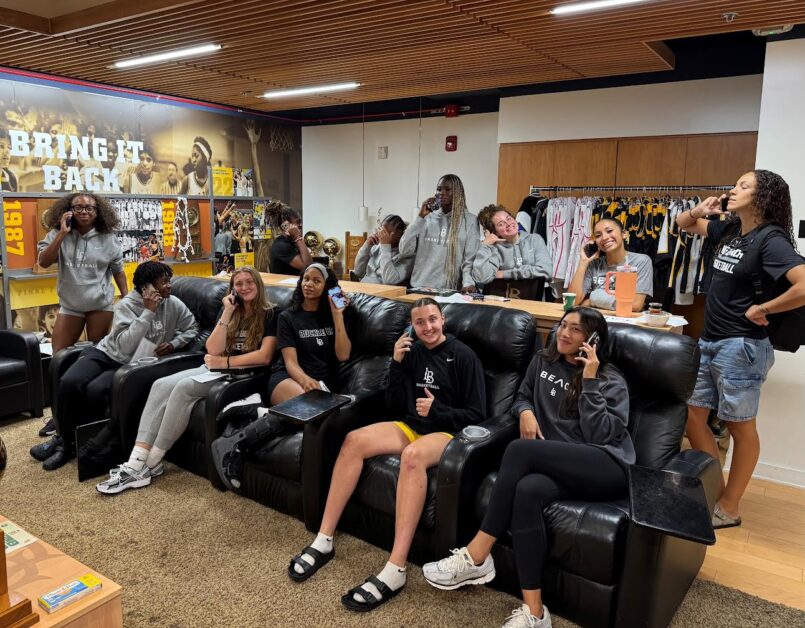
Women’s Basketball phoneathon 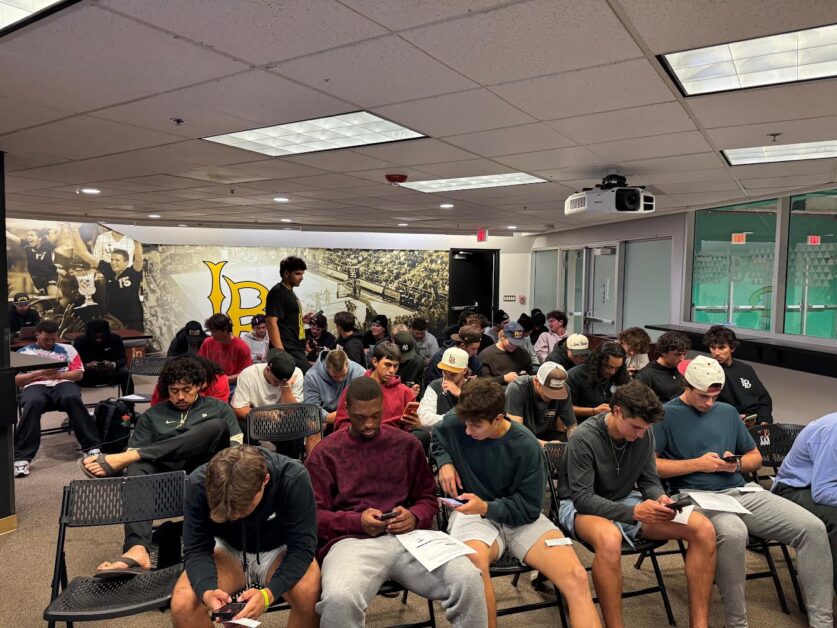
Baseball phoneathon


Matt Schneider, Assistant Athletic Director for Development at Long Beach State

Student-athletes as the outreach
With 325 student-athletes across its programs, Long Beach State built peer-to-peer outreach into the core of each campaign, mainly through phoneathons and texting.
Coaches and staff train athletes to frame the outreach as sharing an opportunity to support their team rather than asking for money — a small shift in framing that made calls to family, alumni, and former coaches feel more natural.
A communication cadence built for each campaign
Every micro-campaign follows the same rhythm:
- Two weeks out: a save-the-date
- One week out: a reminder highlighting specific giving opportunities
- Day of: three emails, at 7 a.m., noon, and 7 p.m.
- One day after: a thank-you email
Giving buttons are tiered from $50 to $5,000, each tied to something tangible — such as team snacks or travel costs — so donors can see exactly what their gift supports.
Stewardship that turns gifts into habits
For Schneider, a gift marks the start of a relationship, not the end of one. Every first-time donor receives a handwritten thank-you card signed by student-athletes and a two-week welcome email sequence from the athletic director.
Matt Schneider, Assistant Athletic Director for Development at Long Beach State

The department also automatically adds new donors to their team’s newsletter list, keeping them connected to the program’s progress long after the campaign ends. A loyalty society recognizes donors who give for three or more consecutive years with additional touchpoints and recognition gifts.
Coach buy-in through healthy competition
To keep momentum going, Schneider posts fundraising totals and donor counts on a whiteboard in the office — a simple, visible way to tap into the competitive instincts of coaches and student-athletes alike. Coaches layer their own incentives on top, often Nike gear for the athletes who bring in the most donors or dollars (though bragging rights tend to matter just as much as the prize).
A platform built to scale with the strategy
Long Beach State moved its crowdfunding and annual giving efforts from ScaleFunder to Advance from Gravyty, a transition Schneider described as seamless and one that improved integration with the department’s CRM along with recurring gift and digital wallet management.
That CRM data now does double duty. Schneider uses it to spot previous donors whose giving has increased over time, a signal he uses to identify the department’s next tier of major and matching-gift prospects, particularly donors capable of a $5,000 gift that can help spark a broader matching effort.
Looking ahead, the department also plans to layer Gratavid personalized video into future campaigns, connecting athlete video messages directly to giving pages.
The results: Growth built by thinking smaller
Since implementing the strategy, Long Beach State Athletics has seen:
- 152.3% increase in annual giving dollars for athletics, year-over-year
- 130.8% increase in total athletic donors
- 1,047 first-time athletic donors, up 234% year-over-year
- 44% increase in general giving dollars outside the annual fund
- Two $25,000 gifts closed within two months of a single campaign
The tiered, tangible giving pages have also created a byproduct Schneider didn’t originally plan for: donors who give more than they intended once they see a specific, visual goal. Those “jumper” gifts have become one more way the department identifies first-time donors with the potential to become major donors down the line.

Matt Schneider, Assistant Athletic Director for Development at Long Beach State
What’s next: Building for a changing landscape
In response to the NCAA’s House settlement, Long Beach State launched the Anchor Fund last fall to support recruitment and retention. Scholarships remain the department’s top priority. The goal, Schneider says, is to make sure every student-athlete can focus on academics and competition, regardless of how the broader landscape shifts.
From here, the department plans to keep building on what’s working: deeper use of CRM data to identify major and matching-gift prospects, and more Gratavid video woven into campaigns already built around athletes telling their own story.
Solution spotlight
Athlete Network from Gravyty is the leading community engagement and fundraising platform built specifically for athletics. The platform helps athletic departments, national governing bodies, and sports organizations engage athletes, alumni, and supporters while driving stronger participation and fundraising outcomes. With branded engagement experiences, integrated giving tools, and AI-powered donor targeting, Athlete Network enables sports organizations to grow revenue and build lifelong communities without adding administrative burden.